
I was gonna leave this as a response to a comment from Joseph on the last post, but I had some issues posting links in the comments box and I figured other people might also be looking for this info.
So, if you too are looking for a low cost solution to for a Digital Recorder or a DIY Boom Pole peep the below:
IPOD RECORDER ATTACHMENTS
I have an attachment that connects to my video iPod that records CD quality (44.1KHz, 16-bit stereo) audio and has a connection for an external mic. I use it as is for my podcast and I've been very happy with the recording quality.
Check it out here:
Belkin Tunetalk Stereo
There's also this one, which I'm not familiar with, but it got a good review as well:
Xtreme Mac Micro Memo
Apart from these, just sniff around the web for digital recorders, if you're looking for a stand-alone recorder.
D.I.Y. BOOM POLES
As for DIY boom poles, there are a bunch of different designs online. Peep these and scour the net and filmmaking forums for more:
Neil Slade's Design
http://www.neilslade.com/Papers/pole.html
Wiremonkey's Boom Pole
http://www.wiremonkey.com/boompole.htm
Number 28 Boom Pole
http://www.number28.com/backlot.html
DV User Forum Post
http://www.dvuser.co.uk/content.php?CID=6
Indy Mogul Video Podcast Tutorial
http://www.indymogul.com/episode/imwe_20070727
Happy guerrilla filmmaking.
-Ant.
Saturday, August 18, 2007
Thursday, August 16, 2007
Yo Where's Ant-ny Been?
After a long summer hiatus I am kicking the blog and podcast back into full gear for the Fall. I know some of you are mad at me for such a looong unannounced absence, but when you see what I’ve been working on morning, noon, and night for a very long time, I hope all will be forgiven.
I spent the first half of the summer finally completing the NEW Down and Dirty DV book. (And I spent the second half of the summer recovering from the effort, going on my very first trip to Europe and finally spending some quality summertime with the fam.)
I am now very excited to say that after more than 2 years of straight hustling, the first PUBLISHED Down and Dirty DV book is complete and finally ready for public consumption.
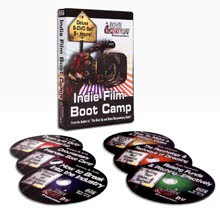
The Shut Up and Shoot Documentary Guide weighs in at 296 full-color pages, 500+ photos and illustrations, and features a Bonus DVD that I will dare to say is the absolute best free DVD included with any film book on the market.
Basically the new book is a greatly enhanced and expanded version of the first book, Down and Dirty DV – Vol.1: Documentaries. This new book is my best attempt to break down the filmmaking process into simple, illustrated, no-nonsense step-by-step tutorials and ultra-practical real-world advice based on all the things I wish someone had told me before I began my own filmmaking journey.
 It could just have easily been titled, All the Things I’ve Done Wrong in Filmmaking and How You Can Avoid Them. (And I’ve done a lot of things wrong in filmmaking over the years, so there’s much to be learned, especially if you’re just starting out.) Although it's doc-specific, most of the info in this book can be applied to narrative filmmaking as well.
Apart from my own advice the new book also features wisdom from Academy Award-winning and nominated docmakers such as Albert Maysles (Grey Gardens, Lalee’s Kin, Gimme Shelter, etc.), Sam Pollard (When the Levee’s Broke, 4 Little Girls, etc.), Adrian Belic (Genghis Blues, Beyond the Call), John Canemaker (The Moon and the Son), plus a bunch more notable and up and coming doc figures.
Anyway, if you’re down with this blog and our iTunes podcast, then you should definitely buy the book and support your favorite digital video pimp. It’ll be available in all the major book stores, but I'll have a more money to invest in the blog and podcast if you order it directly from the Down and Dirty DV website or this blog.
If you’re a filmmaker and you’re on the fence about buying this book, I just pose one question to you:
If I give you all the quality info in the blog and podcast for FREE, how much MORE quality info do you think I’ll give you if you actually PAY for it?
ANSWER: A Whole Helluva Lot More! With pictures, audio, and video.
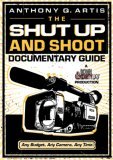
Yes, Anthony, I’m down with Down and Dirty DV and I'm tired of talking about the movie I want to make and ready to shut up and shoot. I want to buy this book right now and finally EXECUTE the films in my head!
'Til next time y'all, Peace, Love, and Video,
-Ant.

I spent the first half of the summer finally completing the NEW Down and Dirty DV book. (And I spent the second half of the summer recovering from the effort, going on my very first trip to Europe and finally spending some quality summertime with the fam.)
I am now very excited to say that after more than 2 years of straight hustling, the first PUBLISHED Down and Dirty DV book is complete and finally ready for public consumption.
The Shut Up and Shoot Documentary Guide weighs in at 296 full-color pages, 500+ photos and illustrations, and features a Bonus DVD that I will dare to say is the absolute best free DVD included with any film book on the market.
Basically the new book is a greatly enhanced and expanded version of the first book, Down and Dirty DV – Vol.1: Documentaries. This new book is my best attempt to break down the filmmaking process into simple, illustrated, no-nonsense step-by-step tutorials and ultra-practical real-world advice based on all the things I wish someone had told me before I began my own filmmaking journey.
It could just have easily been titled, All the Things I’ve Done Wrong in Filmmaking and How You Can Avoid Them. (And I’ve done a lot of things wrong in filmmaking over the years, so there’s much to be learned, especially if you’re just starting out.) Although it's doc-specific, most of the info in this book can be applied to narrative filmmaking as well.Apart from my own advice the new book also features wisdom from Academy Award-winning and nominated docmakers such as Albert Maysles (Grey Gardens, Lalee’s Kin, Gimme Shelter, etc.), Sam Pollard (When the Levee’s Broke, 4 Little Girls, etc.), Adrian Belic (Genghis Blues, Beyond the Call), John Canemaker (The Moon and the Son), plus a bunch more notable and up and coming doc figures.
Anyway, if you’re down with this blog and our iTunes podcast, then you should definitely buy the book and support your favorite digital video pimp. It’ll be available in all the major book stores, but I'll have a more money to invest in the blog and podcast if you order it directly from the Down and Dirty DV website or this blog.
If you’re a filmmaker and you’re on the fence about buying this book, I just pose one question to you:
If I give you all the quality info in the blog and podcast for FREE, how much MORE quality info do you think I’ll give you if you actually PAY for it?
ANSWER: A Whole Helluva Lot More! With pictures, audio, and video.
Yes, Anthony, I’m down with Down and Dirty DV and I'm tired of talking about the movie I want to make and ready to shut up and shoot. I want to buy this book right now and finally EXECUTE the films in my head!
'Til next time y'all, Peace, Love, and Video,
-Ant.
Friday, April 27, 2007
7 Hot Products for Guerrillas at NAB 2007

I recently returned from the annual NAB (National Association of Broadcasters) Show in Las Vegas. If you're not familiar with the NAB show, it's the world's largest electronics show where all the camera, sound, light and software manufacturers show off all their newest and hottest gear.
NAB is definitely worth making a pilgrimage to sometime, especially if you are a gearhead or techie. Not only can you check all the latest in film and video tools, but you can talk to the people who make and represent the products... all side-by-side. The show floor is so big that you can not take it all in in a day.
Below is my report on some the most exciting new and recent products for guerrillas that I saw at NAB. Keep in mind, these are my favorite picks for products that I believe would be useful for us low-budget guerrillas, so I'm not covering all the coolest gadgets I saw, just the ones that are practical and reasonably affordable for the low-budget crowd. By the way, you can click to enlarge most of the pix below. Please feel free to share a comment if you have info or links to add about these products. Here's my take:
1. The Rosco LitePad
 Rosco, best known for their gels, has made a new venture in the world of lighting with their new LitePad. Rosco's LitePads are ultraslim light units that resemble two panes of plexiglass sandwiched together. They consume very little power (12volts). They are lightweight and generate very little heat. Rosco's website suggests using them as prop lights (as in the light source from a tv or computer) or to squeeze into tight sets for supplementary lighting. It was too bright on the showfloor to tell, but I would venture to say that these units could also be employed as onboard camera lights for ENG
  and doc shooting- essentially, a poor man's LitePanel. They come in various shapes and sizes from 3x3 up to 12x12. Best of all they are affordably priced. I believe the rep quoted the price on the 3"x12" unit at just under $200.00 . For some reason exact pricing on these units is still pretty elusive, but I know they are way cheaper than the popular, but pricey, LED LitePanels. If anyone has actualy used these units in the field, pleae enlighten us more with a comment below.
2. Sony's XDCam EX
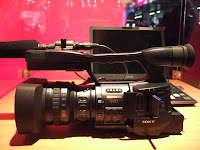 Sony has jumped onto the solid state bandwagon with it's new prosumer entry, the XDCam-EX, which is basically Sony's answer to Panasonic's HVX-200. (Check out Camcorder Info's video clip about the XD-Cam EX.) Scheduled to drop somewhere around the end of this year, the XDCam EX will be priced comparably to the HVX-200 at around $8000. Most notably, the XDCam EX will feature three 1/2" image chips and capture 1080i, 720P and
 1080P HD footage to Express PC cards which fit neatly into a little slot on Apple's MacBook Pro and other PC computers for instant editing. It has variable frame rates, so you can under or overcrank the camera to get fast or slow motion effects. Sony's Express PC cards are called "SxS Cards" (pronounced "S by S"). The SxS Express Cards are smaller and transfer data faster than Panasonic's P2 cards. According to Sony a 16GB SxS card will hold about an hour of HD footage. The camera has 2 SxS card slots, so you could shoot a total of 2 hours if you had two cards. It' smaller than the HVX and I think even smaller than Sony's HDV line. Canon...the tapeless aquisition ball's in your court. Man up!
3. Digitronics Spycopter
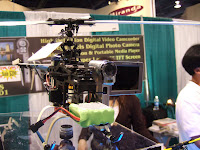 Digitronics apparently makes little flash card cameras and RC helicopters seperately and eventually got the bright idea to put the two together and the result is a Down and Dirty news chopper. Okay, maybe that's a stretch, but the ability to get controled aerial video shots for under $1000 is still quite notable. I wasn't very impressed with the imagery of the Digitronics flash memory video camera, but it could probably pass muster for online videos, quick crowd shots, bird or insect point-of-view shots, and anything quick. I also imagine you could also get away with some sort of special FX treatment in post like posterization, heavy grain, black and white, etc. I honestly have no practical filmmaking use for it at the moment, but I'm sure if I think on it a little longer on it I'll come up with a good reason to get one, (or at least a reason that will convince my wife).
4. Tiffen DFX Digital Filter Suite
 Tiffen, the king of filters, has come up with a very intriguing new product with their new DFX Digital Filter Suite software hitting the market any day now. It’s sort of their version of Magic Bullet software. Only instead of just film looks, Tiffen’s software also simulates hundreds of different Tiffen filters such as graduated sky filters, Soft FX, star filters, on and on, all for about $300. I’m still a little skeptical for reasons I‘ll get to in a moment, but two things really impressed me about this software: 1) It has a clean simple user-friendly interface similar to Apple’s software products (iFilter?), but also integrates into Final Cut Pro and Avid and 2) It packs in a wide-variety of preset looks and Filter FX that can also be customized and tweaked further. The only reason I’m skeptical, is that in the demo that Tiffen gave on the show floor, they only used still photos. All the images looked great with the filters applied and it only took a few minutes to create mattes and completely change the image to a variety of different looks. Which certainly leaves one to question whether the product is considerably slower with video FX and whether the video FX will look as good as the stills. (Otherwise, why would you only demo still photos to a moving video crowd?) So I’m skeptical, but if this product performs as claimed and as I saw demo’ed, I think it would be a powerful addition to any videographers arsenal allowing us greater flexibility and ease with manipulating our images- after the fact. The most obvious application to me was for music videos. They have free demos, but I haven’t had a chance to install it and put it through the paces. To get a free demo, click here then fill out the form on and make sure you put "DFX" in the Feedback box. In my experience, Tiffen’s always put out quality stuff, so I suspect that even if this first software offering does have quirks and issues, it will probably improve with time. When I get around to doing a full demo, I’ll try to put something online. No promises though.
5. Toon Boom Storyboard Pro
 Storyboarding software has been around for awhile now, but Toon Boom takes it to the next level with the addition of animatics in Storyboard Pro. Unlike some other storyboarding programs that give you bare bones starter images, Storyboard Pro comes fully loaded with plenty of characters, props, and settings. Moreover, it can be used with a Wacom tablet, so you can sketch your own storyboards directly into the program. Coloring in and resizing characters and props takes just seconds. However, where Storyboard Pro really shines is in it's ability to animate the completed storyboards to replicate dolly
  shots, crane shots, zooms, etc. in a matter of minutes. Again, it's easy, fast, and effective... all synonymous with Down and Dirty filmmaking. Unfortunately at $900.00 it ain't cheap. However, if you shoot action features or do animation, this tool could go a long way to saving time experimenting with shots that don't work and let you fully visualize your film before a single frame is even shot.
6. Hoodman Wrist Support
 If you're shooting Down and Dirty-style chances are you do a lot of handheld, and if you're skinny like me, chances are your wrist hurts like hell after a long day of shooting. Take the Ben-Gay out of your camera bag and try replacing it with one of these babies from Hoodman, the maker of popular LCD screen hoods. I tried this out for a few minutes on the show floor and really liked the feel. It's not a steadying device, although it definitely helps. Rather, this is a rigid padded wrist support that kinda resembles the wrist pads used for rollerblading with two hard splints on either side and a mounting bracket for the camera similar to that on a tripod. It distributes the camera weight more evenly over the forearm which takes a considerable amount of strain off your wrist and the velcro fasteners keep it snug and comfortable. With this little gadget, you can actually drop your hand and completely let go of the camera and it will still stay snug. It actually feels more like the camera is some type of cyborg extension of your arm. You don't hold it as much as it becomes another part of you...very cool. At around $200.00 (if I recall correctly) it's definitely within a guerrilla budget and well-worth it for people who do a lot of handheld camerawork. At last check, they didn't have it up on their website yet, but I'm sure it will materialize soon. (photo from DigitalMediaNet.com)
7. The Losmandy Spider Dolly
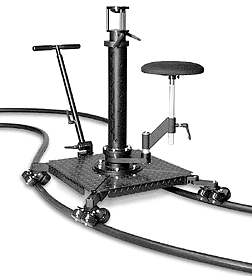 I wrote about this one in a previous post, so I'm just gonna link to it. I'm listing it here again, because I'm still surprised that more people don't know about this innovative little dolly by the good people at Losmandy. It's easier to use, more flexible, and less expensive than many dollies on the market and the whole thing folds up into a little suitcase. I played with it for about an hour on the show floor and remain a huge fan. Anyway, click here for the previous post.
Wrap Up
So that's about it for my top picks. There were plenty of hot products at NAB this year, but these are just the top five that immediately caught my imagination as effective tools for digital filmmakers on a budget.
Now I'm sure many of you may be wondering what about the amazing incredible mythical legendary Red One 4K camera and why it's not on this list. The truth is it was the biggest buzz of the show and I was so impressed that I want to give it it's own entry apart from this round up, so I'll be dropping a video podcast on it as well... very very exciting stuff happening there. Stay tuned peeps. Til next time...
Peace, Love and Video, Baby. I'm out.
-Ant.
NAB is definitely worth making a pilgrimage to sometime, especially if you are a gearhead or techie. Not only can you check all the latest in film and video tools, but you can talk to the people who make and represent the products... all side-by-side. The show floor is so big that you can not take it all in in a day.
Below is my report on some the most exciting new and recent products for guerrillas that I saw at NAB. Keep in mind, these are my favorite picks for products that I believe would be useful for us low-budget guerrillas, so I'm not covering all the coolest gadgets I saw, just the ones that are practical and reasonably affordable for the low-budget crowd. By the way, you can click to enlarge most of the pix below. Please feel free to share a comment if you have info or links to add about these products. Here's my take:
1. The Rosco LitePad
 Rosco, best known for their gels, has made a new venture in the world of lighting with their new LitePad. Rosco's LitePads are ultraslim light units that resemble two panes of plexiglass sandwiched together. They consume very little power (12volts). They are lightweight and generate very little heat. Rosco's website suggests using them as prop lights (as in the light source from a tv or computer) or to squeeze into tight sets for supplementary lighting. It was too bright on the showfloor to tell, but I would venture to say that these units could also be employed as onboard camera lights for ENG and doc shooting- essentially, a poor man's LitePanel. They come in various shapes and sizes from 3x3 up to 12x12. Best of all they are affordably priced. I believe the rep quoted the price on the 3"x12" unit at just under $200.00 . For some reason exact pricing on these units is still pretty elusive, but I know they are way cheaper than the popular, but pricey, LED LitePanels. If anyone has actualy used these units in the field, pleae enlighten us more with a comment below.
2. Sony's XDCam EX
 Sony has jumped onto the solid state bandwagon with it's new prosumer entry, the XDCam-EX, which is basically Sony's answer to Panasonic's HVX-200. (Check out Camcorder Info's video clip about the XD-Cam EX.) Scheduled to drop somewhere around the end of this year, the XDCam EX will be priced comparably to the HVX-200 at around $8000. Most notably, the XDCam EX will feature three 1/2" image chips and capture 1080i, 720P and 1080P HD footage to Express PC cards which fit neatly into a little slot on Apple's MacBook Pro and other PC computers for instant editing. It has variable frame rates, so you can under or overcrank the camera to get fast or slow motion effects. Sony's Express PC cards are called "SxS Cards" (pronounced "S by S"). The SxS Express Cards are smaller and transfer data faster than Panasonic's P2 cards. According to Sony a 16GB SxS card will hold about an hour of HD footage. The camera has 2 SxS card slots, so you could shoot a total of 2 hours if you had two cards. It' smaller than the HVX and I think even smaller than Sony's HDV line. Canon...the tapeless aquisition ball's in your court. Man up!
3. Digitronics Spycopter
 Digitronics apparently makes little flash card cameras and RC helicopters seperately and eventually got the bright idea to put the two together and the result is a Down and Dirty news chopper. Okay, maybe that's a stretch, but the ability to get controled aerial video shots for under $1000 is still quite notable. I wasn't very impressed with the imagery of the Digitronics flash memory video camera, but it could probably pass muster for online videos, quick crowd shots, bird or insect point-of-view shots, and anything quick. I also imagine you could also get away with some sort of special FX treatment in post like posterization, heavy grain, black and white, etc. I honestly have no practical filmmaking use for it at the moment, but I'm sure if I think on it a little longer on it I'll come up with a good reason to get one, (or at least a reason that will convince my wife).
4. Tiffen DFX Digital Filter Suite
 Tiffen, the king of filters, has come up with a very intriguing new product with their new DFX Digital Filter Suite software hitting the market any day now. It’s sort of their version of Magic Bullet software. Only instead of just film looks, Tiffen’s software also simulates hundreds of different Tiffen filters such as graduated sky filters, Soft FX, star filters, on and on, all for about $300. I’m still a little skeptical for reasons I‘ll get to in a moment, but two things really impressed me about this software: 1) It has a clean simple user-friendly interface similar to Apple’s software products (iFilter?), but also integrates into Final Cut Pro and Avid and 2) It packs in a wide-variety of preset looks and Filter FX that can also be customized and tweaked further. The only reason I’m skeptical, is that in the demo that Tiffen gave on the show floor, they only used still photos. All the images looked great with the filters applied and it only took a few minutes to create mattes and completely change the image to a variety of different looks. Which certainly leaves one to question whether the product is considerably slower with video FX and whether the video FX will look as good as the stills. (Otherwise, why would you only demo still photos to a moving video crowd?) So I’m skeptical, but if this product performs as claimed and as I saw demo’ed, I think it would be a powerful addition to any videographers arsenal allowing us greater flexibility and ease with manipulating our images- after the fact. The most obvious application to me was for music videos. They have free demos, but I haven’t had a chance to install it and put it through the paces. To get a free demo, click here then fill out the form on and make sure you put "DFX" in the Feedback box. In my experience, Tiffen’s always put out quality stuff, so I suspect that even if this first software offering does have quirks and issues, it will probably improve with time. When I get around to doing a full demo, I’ll try to put something online. No promises though.
5. Toon Boom Storyboard Pro
Storyboarding software has been around for awhile now, but Toon Boom takes it to the next level with the addition of animatics in Storyboard Pro. Unlike some other storyboarding programs that give you bare bones starter images, Storyboard Pro comes fully loaded with plenty of characters, props, and settings. Moreover, it can be used with a Wacom tablet, so you can sketch your own storyboards directly into the program. Coloring in and resizing characters and props takes just seconds. However, where Storyboard Pro really shines is in it's ability to animate the completed storyboards to replicate dolly shots, crane shots, zooms, etc. in a matter of minutes. Again, it's easy, fast, and effective... all synonymous with Down and Dirty filmmaking. Unfortunately at $900.00 it ain't cheap. However, if you shoot action features or do animation, this tool could go a long way to saving time experimenting with shots that don't work and let you fully visualize your film before a single frame is even shot. 6. Hoodman Wrist Support
If you're shooting Down and Dirty-style chances are you do a lot of handheld, and if you're skinny like me, chances are your wrist hurts like hell after a long day of shooting. Take the Ben-Gay out of your camera bag and try replacing it with one of these babies from Hoodman, the maker of popular LCD screen hoods. I tried this out for a few minutes on the show floor and really liked the feel. It's not a steadying device, although it definitely helps. Rather, this is a rigid padded wrist support that kinda resembles the wrist pads used for rollerblading with two hard splints on either side and a mounting bracket for the camera similar to that on a tripod. It distributes the camera weight more evenly over the forearm which takes a considerable amount of strain off your wrist and the velcro fasteners keep it snug and comfortable. With this little gadget, you can actually drop your hand and completely let go of the camera and it will still stay snug. It actually feels more like the camera is some type of cyborg extension of your arm. You don't hold it as much as it becomes another part of you...very cool. At around $200.00 (if I recall correctly) it's definitely within a guerrilla budget and well-worth it for people who do a lot of handheld camerawork. At last check, they didn't have it up on their website yet, but I'm sure it will materialize soon. (photo from DigitalMediaNet.com)7. The Losmandy Spider Dolly
I wrote about this one in a previous post, so I'm just gonna link to it. I'm listing it here again, because I'm still surprised that more people don't know about this innovative little dolly by the good people at Losmandy. It's easier to use, more flexible, and less expensive than many dollies on the market and the whole thing folds up into a little suitcase. I played with it for about an hour on the show floor and remain a huge fan. Anyway, click here for the previous post.Wrap Up
So that's about it for my top picks. There were plenty of hot products at NAB this year, but these are just the top five that immediately caught my imagination as effective tools for digital filmmakers on a budget.
Now I'm sure many of you may be wondering what about the amazing incredible mythical legendary Red One 4K camera and why it's not on this list. The truth is it was the biggest buzz of the show and I was so impressed that I want to give it it's own entry apart from this round up, so I'll be dropping a video podcast on it as well... very very exciting stuff happening there. Stay tuned peeps. Til next time...
Peace, Love and Video, Baby. I'm out.
-Ant.


Thursday, March 15, 2007
Star Wars Nerds Unite!

If you are one of the legions of filmmakers who are hard-core Star Wars fans, you my want to get a piece of this action... LucasFilm, AtomFilms, and SpikeTV have teamed up to sponsor a Star Wars fan video contest.
They are looking for Star Wars spoofs, documentaries, animation, and other film projects by fans. George Lucas himself will pick the top film which will be shown at Star Wars Celebration IV and on Spike TV. Check out the Contest Guidelines and post your entry on the website.
Hey, this may be your only chance to pitch Lucas that great Star Wars spinoff you've been going on about for years (or you could ask him what the hell he was thinking when he created Jar Jar Binks). Either way, sounds like fun for fans.
Check out some of the past Star Wars fan films.
It's really hard to resist ending with some corny Star Wars tagline, but I will mercifully spare you. Peace out.
-Ant.
Wednesday, February 21, 2007
The Democratization of Cinema?

Check this recent article in the New York Times:
"Where’d You Go to Film School? In My Bedroom"
It has some great ideas to contemplate. The article breaks down recent DVD tutorials which purportedly teach you the basics of filmmaking like, "Film School in a Box", "Hollywood Camera Work" and "Make your own Damn Movie" from the director of "The Toxic Avenger" at Troma Entertainment.
It then goes on to discuss the ideological conflicts and similarities between the creators of these programs and traditional film school programs. Good reading material for anyone interested in the future of filmmaking.
The article ends with this quote: "...democratization appears to be an irreversible trend in cinema. The thousands of movies each year now submitted to festivals around the world are testimony to a guerilla mentality that says no one needs official permission to make a film; and the advocates of teaching software often see themselves not so much training, but liberating new filmmakers."
As you are probably already aware, Down and Dirty DV is putting out it's own a one of kind guerrilla filmmaking DVD tutorial this Fall. If you liked the video podcast and the book, you'll definitely dig the DVD. Also, drop us an email if there are any particular topics you' like us to put on the DVD.
Whether you go to film school or not, it's always a wise practice to expand and round out your filmmaking knowledge with fresh educational sources and new approaches to filmmaking. That's what Down and Dirty DV is all about!
Copyright Law

Okay, copyright law isn't sexy.
But it is handy.
There are real some basic things about copyrighting film and video work that I was completely unaware of. But a recent visit to The United State Copyright Office set me up with all the copyright information I'll ever want. For a government office, they have a great, straightforward website. Check the copyright basics for some quick answers, but if you get into the details this stuff is very useful.
For instance, here's all you have to do to properly mark your film or video for copyright.
Another surprising piece of knowledge from the office: "Copyright exists from the moment the work is created.... Your work is under copyright protection the moment it is created and fixed in a tangible form that it is perceptible either directly or with the aid of a machine or device."
While The U.S. Copyright Office charges fees to register a creative work, they kindly points out that those fees are almost completely unnecessary. Whoever heard of a government office not trying to charge you fees?!
Also, whoever put this site together had a strange sense of humor - check the link on how to copyright your Elvis siting!
And a final pointer: just press option-g to get that nifty little copyright symbol.
© 2007 Nathan Kensinger/Down and Dirty DV
Monday, February 12, 2007
The Best of Sundance

Sundance 2007 is over, but now the best part of the festival is online. The organizers of the festival have made available a huge trove of material that should be helpful for any filmmaker.
Included on the site are short interviews with many of the filmmakers who screened work at the festival, explaining their filmmaking process.
Another great feature on the site is the inclusion of over 40 of the short films exhibited at Sundance, shown in their entirety along with a contact list and full credits.
One particularly good short is "Motodrom" - directed by Joerge Wagner - which won an honorable mention award for short films at the festival.
Also available at this post-fest roundup is a interesting collection of trailers from the last 25 years of Sundance, starting back when it used to be called "The United States Festival."(!)
Check it out!
Monday, January 29, 2007
Filming underground

It has long been believed, by many filmmakers and photographers, that shooting in the iconic New York City subway system is against the law and a great way to get the unwanted attention of transit cops. In a post 9/11 city, this belief is generally accepted as untested fact. Why should you expect to be allowed to freely capture images in such a potentially sensitive environment?
The Metropolitan Transportation Authority (MTA) has tried at least twice in the past few years to institute a ban on photography and filming for safety reason. But public outcry has so far succeeded in stopping them in their tracks.
And so, buried in the Restricted areas and activities section of the MTA's the rules of conduct is Section 1050.9 C.
Why not print out a copy and take it along on your next low-budget, hand-held, unlit shoot?
"Section 1050.9 C
Photography, filming or video recording in any facility or conveyance is permitted except that ancillary equipment such as lights, reflectors or tripods may not be used. Members of the press holding valid identification issued by the New York City Police Department are hereby authorized to use necessary ancillary equipment. All photographic activity must be conducted in accordance with the provisions of this Part."
And for anyone interested in making a big budget Hollywood movie in the New York Subway - heres a great how-to article from the MTA:
http://www.mta.info/mta/news/newsroom/nyct-lopez.htm
Meanwhile London's metro system, considered by many to be almost as scenic as New York's, requires permits for all filming and photography:
http://www.tfl.gov.uk/tube/arts/filming/filming-faqs.asp
Monday, January 22, 2007
Festival Strategy 2007
It's a new year and that means its time for another round of film festivals. According to the New York Times, we are in "January, the month of Sundance" and every newspaper and film
 site is doing their spin on this behemoth film festival. The San Francisco Chronicle says Sundance "Puts Risk-Takers at Forefront" while Indiewire has devoted all of its headline content to "Park City.”
A more instructional article for filmmakers was recently published in the New York Times, an article featuring Withoutabox.com, a six year old company that connects filmmakers to festivals around the globe. The thrust of the article, besides detailing how this online company works, was that there are now more filmmakers vying for slots in film festivals then ever before, partially because of companies like Withoutabox. To meet this demand, there are more and more film festivals popping up around the country.
What's a filmmaker to do with all these festivals and with the increase in competition?
 The answer is Festival Strategy, as recommended by Slamdance, the alternative to Sundance. This smaller alternative festival says “it is important to have a festival strategy. It's better to premiere your film at a more high profile festival, and then play the smaller fests later in the year.”
Check out this great guide to Festival Strategy from Disc Makers which answers all the questions on how to deal with the film festival circuit...
Also, just in case you missed it, here's a link to the most recent Down and Dirty DV Podcast, an article entitled "7 Ways to Work a Film Festival" (.pdf - Adobe Acrobat file.)
And good luck in the New Year!
Monday, January 8, 2007
We'll Fix it in Post!!
Well, for most Down and Dirty filmmakers, you are your own post! You are the one scratching your head late at night in front your own computer trying to whip those less than perfects shots into shape.
I wanted to give you a little tip about one of the best resources for post-production information on the web: http://www.kenstone.net/
Bookmark this page before you start post-production!
Ken Stone's Final Cut Pro is first place I go when I want to understand anything about Final Cut Pro, iMovie, DVD Studio Pro, iDVD, digital effects, or anything related to the technical side of editing.
Ken's website has been around for over six years and has over 500 articles that are full of clear, simple, step by step instructions. He has articles on how set up your project, how to edit (from the basics to more advanced), and how to create any number of useful and nifty effects. If you find yourself needing 'to fix it in post' but you don't know how, look for the answer on Ken's page.
For example check out this tutorial on ways to make 4:3 footage fit into your 16:9 project.
Faking It : Making 4:3 footage work in 16:9 projects. By Jude Cotter


Subscribe to:
Posts (Atom)


 Posts
Posts


