Friday, April 28, 2006


Will This Camera Change the Filmmaking Forever?

Arguably the hottest product at NAB this year was the Red Camera designed by Jim Jannard, founder of the Oakley glasses company. Although, they were only showing a non-working prototype, the mere concept of Jannard's camera is revolutionary.

Format Type(s) HD+
Resolution(s) 4k. 2k. 1080, 720, 480
Frame Rates Variable: 1-60fps (2540p, 4k, 2k, 1080p, 720p) 1-120fls (2k, 720p)
Medium FireWire 800/400, USB-2 and eSATA interfaces
Lens Mount Interchangeable
Image Sensor 12 Mpxl CMOS
Audio Inputs 4 channel uncompressed, 16 / 24 bit, 48KHz
Dimensions Unknown
MSRP $17,500
Street Price Unknown

I'm a big proponent of technology, because it's the driving force that's made filmmaking more democratic. However, I'm not much of a techno-geek, so I'll try to explain why this camera is so hot in the crudest of layman's terms.

In short, if this camera delivers on it's specs, it will essentially shoot images that are 4 times the quality of the current crop of $3000-$10,000 Mini-DV cameras and twice the quality of the higher-end pro cameras that are currently in it's price range (approx. $20K-$30K w/ lens) such as Sony's XDCam and Panasonic's F900 series. Now dropping $20K-$30K may seem like a lot of dough... okay it is a lot of dough, but it's an incredible value for what this camera is promising to deliver.

Think of it as if someone told you could buy or rent a Ferrari for the price of a Jetta. Yeah, it's kinda like that.

The image sensors on this camera are larger than anything out there. It can be used with 35mm and other professional film lenses. (Which means incredible depth of field.) This camera is capable of shooting in what I believe is being dubbed as "Super HD". What does that actually mean? It means it records a picture that's twice as good as the best HD TV out there. The picture is so good that we don't even have the technology to see how good it is yet! That's a helluva camera. Check out these links below for more precise and geeky explainations:


Wednesday, April 26, 2006


What's Up With the Book?

I just wanted to give everyone a quick update on the debut "Down and Dirty DV: Vol. 1 - Documentaries" book. The project has really taken off and expanded from
my original concept. At the time of this writing my page count is 245 with somewhere in the neighborhood of 100 photo illustrations, line-drawings, and diagrams.

As you probably already know, I am self-publishing this book in true guerilla fashion. My release date was supposed to be this month, but I've decided to hold off until school is back in in September.

There are a couple of reasons for this. #1, I'm just burnt out after a year and half of writing, shooting video and setting up all the business ends of the Down an
d Dirty DV Project and I want to take the summer to slow down a little, let my editor, Darren, finish working his magic on the book and put together a full marketing and launch plan and arrange for some focus groups to help me tweak the contents to the specific needs of today's digital guerrillas.

The other big reason is that a major company has recently expressed some interest in distributing the book on a much wider scale than I'd ever be able to accomplish on my own. So I'm talking to them to see if we can work out the deal numbers to form a win-win situation (see last post). The whole thing will involve lawyers and consultants and lots of fun hours combing through contracts, so I need the extra time to explore wider distribution options.


When I worked on the movie "Paper Chasers", Flavor Flav gave us some great financial advice... He said,


"Try to find people that want to make money WITH you and not people that want to make money OFF of you."


In short- look for the win-win. That's a simple criteria I apply to every potential business deal. (Yes, I re
alize the irony of quoting Flavor Flav on financial advice, but good advice is good advice regardless of the size of the clock around the person's neck who's giving the advice.)

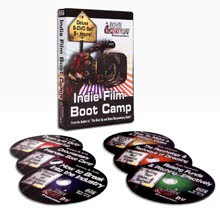
So this summer will be dedicated to getting the book business and marketing plan fully in place, completing the Down and Dirty Documentary-Making DVD, and pumping out some video podcasts, and revamping and expanding the website. Everything is taking a little longer than anticipated because the project keeps evolving and I'm only one man doing this part-time outside of my day gig and family duties but I've got a great team of advisors and allies and fellow guerrillas who are all helping me to make this a truly revolutionary project. I really want to shake some things up in film instruction, but I gotta do it right. Same as with a film. All will be revealed soon enough then you'll understand why it took so long.

Peace.
-Ant.

Tuesday, April 18, 2006

The Secret to Guerrilla (Or Any Other Kind of) Success

This is one of those "duhhh" bits of advice, but it nevertheless seems to elude many indie filmmakers on a regular basis. What I am about to tell you is life advice that you will find helpful in getting any number of things or outcomes that you desire. It has served me well since Junior High School and I've never regreted applying it to any given situation. Are you ready for this bombshell? Here goes:

Whenever seeking the help of another person or organization you should always try to create a win-win situation that will benefit both you and them.

That's it. That's my mind-blowing filmmaking revelation. Let me elaborate. (I promise, I'm keeping this post short.) Too often I am consulted by young filmmakers who plan or are in the process of approaching some organization or person to get some thing for free. It might be an equipment donation, a free location, a sponsorship, an introduction, etc.

(PHOTO: One of my guerrilla allies, Director/Producer Pete Chatmon, of the upcoming film "Premium". I help Pete's company Double 7 Films with some of their video and production needs and he helps me with business consultations and introductions for the Down and Dirty DV Project. That's Win-Win, Baby!)


A classic amateur guerrilla mistake is to assume that somehow these people will, out of the sheer generosity in their heart, want to help YOU with YOUR project. The reality is that people want to help themselves much more than they want to help someone else. That's just human nature. Always has been.

How often do you go around looking for ways to help other people that doesn't benefit you? (FYI- Doing it just to feel good about it counts as a benefit.) We'd all like to help other people more and in more ways, but we are so pre-occupied with our own needs and problems that we have little extra energy to devote to efforts that solely benefit other people. The most stable and productive partnerships are all win-win. Win-win situations are how you form allies in filmmaking and life. And you need allies for both.

Assess your skills and resources, then assess the people who are in a position to help you further your project and figure out what you may be able to offer that they might need. All you have to do is put yourself in their shoes and pretend you are them listening to your pitch from their perspective then ask, "How will this benefit me?" (not you-me, but you-them).

If you train yourself to look at any given situation from the other person's perspective, you will almost instantly know when you are wasting your (and their) time and you will be able to anticipate where you will get resistance to your requests and how to best overcome it before a single conversation has even taken place.

Approach by focusing on mutual needs. Never pitch something as a favor.

Unless someone owes you a favor, this is a turnoff. By the same token, don't contact someone out of the blue with your idea for how you can do them an unsolicited favor, because they will likely be suspicious and question your motivations. They know you want something in the end and they will just tune out your pitch until they know what it's going to cost them. It's like when a cheery telemarketer calls to tell you that you've just won a "free" trip to a resort and starts telling you about the lovely amenities before telling you the real catch.

Instead, just be honest and approach with a realistic and thought out plan for how you can both help each other. Explain what you need from them and explain how it will benefit them. People respect this kind of honesty and it will take down some of their defenses since they already know what you want and they see that you've taken their situation into consideration as well.

There will be cases where you seemingly have nothing to offer someone, because they have considerably more resources than you already. You should certainly still ask, but don't waste a lot of time begging for things or pleading to convince someone of how great your project will be. Instead look for more suitable people to trade favors with.

(My long time allies, Rebekah and Christie, who run Filmtrix.org gave me an interview for the Down and Dirty DV Podcast (coming soon) and I'm giving them some additional promotion. That's Win-Win, Again!)


Some typical trade offs in guerrilla filmmaking are:

Locations - Exposure
Crew - Experience
Talent - Demo Reel
Equipment - Credit or Experience
Crew (your film) - Crew (their film)
Products - Product Placement
Food - Credit or Exposure
Professional Services - Points on Film
Post Production Services - Points on Film

And the list goes on and on.


Don't look for handouts. Look for allies.

You may be able to scrouge up one or two handouts here and there, but an ally is a powerful long-term resource that will serve your objectives long into the future as you serve theirs. You absolutely can't make a film without them.

And that's all I have to say about that.

-Ant.

Thursday, April 6, 2006

Long Time, No Posts

So it's obviously been waaay too long since my last entry. As I pointed out before, I've got all theses balls in the air and I'm trying not to drop any, but alas, I let the blog hit the floor for a month to focus on finishing the book and lining up things to complete the video podcast and the guerrilla DVD. I also dipped down to the Miami Film Festival for my man, Pete Chatmon's film, "Premium". (I'll be writing more about that project in the near future.)

So the new release date for "Down and Dirty DV - Vol. 1: Documentaries" is April 28th. I was really busting ass to get it out by April 15th, but I ultimately realized that I would've compromised some of the content. I've seen some self-publishing efforts that I thought were a little shabby and half-assed and I definitely don't want anyone to put my book in that category., so I've spent most of the last month just really focusing on quality control: new graphic illustrations, better photo illustrations, fact-checking, a chart of the latest cameras, tweaking the cover, etc. After a very difficult time finding someone that could work with my tight guerilla timeline I just secured a book editor, Darren Hackett.

Darren is one of my best friends going all the way back to 2nd grade. No joke. He's a talented screenwriter and has been copy writing for a long time now. Part of my end game to this whole Down and Dirty DV effort is to produce his screenplay, "Growing Up Thirteen", which is a drama loosely based on our crew back in the day at Woodlawn Highschool in Baltimore, MD.

Darren is actually the whole reason I got into filmmaking. Growing up the idea that I even could make film and television completely eluded me. It just seemed like some magical inaccessible process, until the Darren came back home from Boston University and showed me his first film. Then it clicked instantly.

I immediately signed up for my first film class at U.M.B.C. (Univ. Maryland Baltimor County) which is an excellent affordable little school in the U.M. system. After I took my first film class and spent a semester in a work fellowship/filmmaking seminar at Disney World I was completely hooked and transfered to NYU's film program and never looked back and the rest is Down and Dirty history. So thanks, D-Money, for putting a brotha down!

The idea that guys like us could actually make films simply blew my mind. It was just never presented to me at Career Day or anywhere else. Once it became my passsion, I had the revelation that kids, especially kids of color, simply weren't being educated about opportunities in this field, let alone encouraged. So while I was still in college, I began speaking at school career days and organizing little workshops for kids. I've always been interested in teaching, but knew I couldn't deal with teacher's pay and lack of growth opportunity, so teaching video was a perfect melding of passions which all lead to Down and Dirty DV.

I can't wait to get the whole thing out to the public. I truly think that this project will democratize filmmaking even further. So many people in this business are about putting up barriers and coveting in formation and guarding their "secrets". I think that's just some insecure bullshit by insecure people in an industry that is run on fear.

I'm all about sharing information and opening doors and I've never regreted it and made a lot of allies in the process. I'm not afraid that I will help people become "more successful" than me. I hope I will. It's all blessings to me. I don't know everything about digital filmmaking (not even close), but everything I do know I'm gonna share through the Down and Dirty DV project, so that others can avoid the same mistakes that I've made in the past, many of which were expensive and painful.

The whole Hollywood system is based on "paying dues" which I do believe in, but there's a fine line between making sure people have paid their dues and making things unnecessarily difficult just because you had a tough time finding your way or nobody helped you. Shit! I'm still having a tough time, but somebody has to break this cycle of self-defeating idiocy. I'm about doing all I can to make it easier for those after me.

If you get to the top before me I think that's great. Then, I've got another friend that can give me a hand. And if somebody doesn't reach back, that's cool too, because it's all about karma, Baby. Everything I've ever done in life, good or bad, has come back to me whether from the original source or not. We all have ambitions and this is a crazy competitive business, but we've gotta be in this together. So don't be stingy with knowledge. Don't covet helpful information. Tell everybody how you pulled off that cool shot. Point out when you see another filmmaker making a fatal mistake. Volunteer some time for the next generation of filmmakers... it always comes back in ways you never imagined. And that's my soapbox rant for today,kids.

'Til next time, peace, love and video y'all.

-Ant.

Saturday, March 4, 2006

Podcast Resources

If my extensive rants have convinced you that podcasting is something you should check out, here are some links to help you get started:

Friday, March 3, 2006

Anthony’s Top 5 Reasons Why You Need to Get Down with Podcasting

1. Get People to See Your Trailer
If you’ve got a trailer for your project, there’s no better way to get it out to the masses. You can just post a straight trailer or you can get creative and dole it out in pieces, show entire scenes, or add additional content similar to DVD extras to entice people to check out your film. Because podcasts are portable the chances of people sharing a trailer they like with friends is much greater. If you’re really smart with your promotion and people respond to the material, your podcast could become “viral” and begin to spread on it’s own momentum driving traffic and media attention to your project. That’s exactly what happened to the media makers I interviewed for Sundance. (see last blog)

2. Digital Film School
Filmmaking education is not just established institutions with professors and formal classes, it’s anything that helps you learn your craft. DVD extras and filmmaker commentaries are mini-film courses in themselves. Similarly, there are a growing number of podcasts (soon to include my own) that cover the subject of filmmaking. Pretty much every week I listen to a few hours of content that helps keep me abreast of new equipment and technologies, industry trends, tips and tricks, and generally how other filmmakers are dealing with the same issues I encounter. It’s specialized education for free. In a few weeks (or sooner) I will begin posting a small portion of the video lessons from the Down and Dirty DV - Vol. 1: Documentaries DVD in podcasts… free for you to download and share. Film school, workshops, and media all cost money. Right now the filmmaking podcasts are all FREE. It’s a great way to try before you buy. Oh and did I mention podcasts are (currently) FREE? That’s a no-brainer.

3. Get People to See Your Movie
If you have a short that you want to get out there, I think this is the best thing to happen since Ifilm.com for all the same reasons I listed above in reason #1. However, I think the potential for features is just being tapped into. You can dole out your movie in pieces and tease the audience. If you’ve got a project just languishing on the shelf, it could find a whole new audience in the podcast world. While it’s admittedly a long shot, it’s possible that in the best-case scenario you could get a distribution deal out of it like the filmmakers from Four Eyed Monsters. If you’ve got a “calling card” film a podcast could help you get funding for the next project or gigs as a director for hire. Most importantly, it’s a cheap way for you to get direct feedback and interaction with your audience. Now it’s not the same, but just so you won’t have to stretch your imagination quite as far, check out this PBS documentary from Frontline posted in 23 parts…now imagine instead of streaming video that those segments are podcasts put out every week.

4. Take Your Projects Anywhere Ready to Show
If you have your videos in a portable format, you’ll always have something to impress that agent you just happened to meet at the gym or that new crewmember you’re trying to recruit. The bottom line is that you can carry all of your video projects with you without the need for a computer or dvd player to show them off.

5. You Can Still Get in on the Ground Floor
The last stats I heard on podcasting just a few weeks ago (on a podcast ironically), said that only 10% of people surveyed even know what a podcast is. 10%! If you’re thinking 10% is lame or why should you waste your time if there is only 10% penetration, then you’re looking at it the wrong way. To me that figure means that this thing is just getting started. Podcasting today is like having an online business was in 1992- It’s cutting edge and the field is still open enough to get attention because there is not as much competition for eyeballs. That’s the situation today, but it’s changing as we speak. Four Eyed Monsters is getting a distribution deal. Anni Rudegair of Soccergirl Incorporated is now in an excellent position to command sponsorships and sell related products. (I don’t know, but suspect that some negotiations may be taking place as I write this.) Both have pulled off these feats after podcasting for less than a year. Feel that draft in the room? Well that’s an open window of opportunity, baby! However, this window of wide-open opportunity closes a little with every new and corporate sponsored podcast that hits the digital airwaves. If you’re in now, God willing, you’ll be well positioned and established when the other 90% catches up in the next few years.

Down and Dirty DV Factoid:
The new Oxford dictionary has officially declared podcasting to be the “Word of the Year - 2005”.

I’m talking infinite possibilities here, people. A few of my associates think I'm overhyping podcasting. Ironically, none of these people have actually tried it. If you just subscribe to a few decent video and audio podcasts, you'll get it right away. So that's it, my whole podcast rant... for now. I'll shut up about it for awhile and get back to video production issues, but I hate to see my fellow filmmakers sleep on such a powerful new medium and miss the boat. Just don't say ya boy, Anthony, didn't try to put you down with podcasting from the get-go.

'Til next time...peace, love, and video, Baby. I'm out.

-Ant.

Tuesday, February 21, 2006

Too Many Balls in the Air

It’s taken me longer to get up the rest of the Sundance coverage than I thought… had to dub tapes, make transcripts, edit, ran out of hard drive space, blizzard, and still work on all the other elements of the project, blah, blah, blah… you know all the usual daily obstacles of a major project.


I’ve decided to hire a transcriptionist and an editor to put together the first few video podcasts. The more I started doing it myself, the more I realized I needed some new people onboard to help out. Since Sundance I’ve kept all the Down and Dirty DV balls in the air at the same time: book, DVD, website, and blog. The Down and Dirty DV podcast was the final deal-breaker.

It’s a lesson that all guerilla filmmakers pick up sooner or later.

YOU CAN’T DO IT ALL YOURSELF.

Even if you are capable of doing each individual task of a larger project, it’s still an unwise practice. You’ll burn yourself out and eventually hit a wall and get frustrated if you don’t have at least a few trusted people periodically (if not regularly) helping you pull off your vision.

Speaking of which, I’m looking for some motivated guerilla-minded individuals to contribute to this blog as regular writers or just commenter. Feel free to use the handy comment button below to leave your two cents. (This is a moderated post, so it may take a day or two for comments to appear.) If you're a guerilla filmmaker and want to write for this blog or have an article or rant or just info on a particular DV tool, simply post it as a comment or hit me up with an email at anthony@downanddirtydv.com and we’ll take it from there.

So back to Sundance… I ranted pretty long on my thoughts about podcasting and how I think it’s going to completely change the way we watch and distribute media, including indie films. I can’t emphasize enough how important it is for indies to familiarize themselves with this new technology, so I’m going to continue the rant just a little longer i my next post with:

Anthony’s Top 5 Reasons Why You Need to Get Down with Podcasting...


…Stay Tuned.

Wednesday, February 15, 2006

Guerilla Reflections on Sundance - Part 3: Meet the Podcasters

I know it’s been 2 weeks since the last blog entry, but seeing how the last entry was so ridiculously long, I figured you'd read it in 2 parts. I’ve been busy cooking up some new stuff for you in the Down and Dirty DV guerilla kitchen. Be patient while I hook up a few more of the side dishes. In a few more weeks I’m gonna drop the full soul food meal that is Down and Dirty DV on y’all.
In the mean time, here’s an appetizer to hold you over…

I finally found the time to put together some crude video clips of my conversation with Sundance Podcast Panelists,
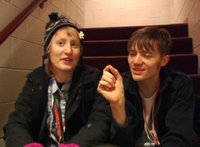
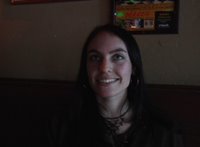
Susan Buice and Arin Crumley, the filmmaking team behind Four-Eyed Monsters. And I also have some short clips of my interview with Soccergirl a.k.a. Anni Rudegair who has been described as the female Howard Stern of podcasting. All three are pioneering video artists in the digital frontier of podcasting and have some valuable things to share about the power of the medium, self-promotion, and building an audience. Listen and learn…


Susan Buice & Arin Crumley


"Soccergirl" Anni Rudegair


More of these interviews will appear on the soon-to-be-released Down and Dirty DV Vol. 1: Documentaries DVD.
That’s all for now. ‘Til next time.

Peace, love and video, Baby. I’m out.


-Ant.

Tuesday, January 31, 2006

Guerilla Reflections on Sundance – Part 2:
Why You're Crazy Insane if You're Not Podcasting


One of the more interesting panels I attended was on Podcasting and Vlogging and how it’s changing the media landscape. For me this was a must-attend panel, because I think that people (in and out of the industry) have no real clue of the huge impact that this technology is going to have on film and tv business models, advertising, and distribution. I'm definitely, going to put a few pages in the book about podcasting.

*NOTE: For sake of brevity I’m using the term podcasting to cover all the new portable forms of video including cellphones, PSP’s, Palm Pilots, iRivers, etc. They are all different devices that more or less do the same things in similar ways. (Full Disclosure: I own a whopping 2 shares of Apple stock. That's about $160.00 worth!)

The Sundance Podcasting Panel included:

Jason Calacanis (moderator): CEO/founder of Weblogs, Inc. which recently sold to AOL for a very healthy sum.

Susan Buice: half of the team of filmmakers of the popular Four-Eyed Monsters podcast which serializes the struggles of making their feature film of the same title.

Anni Rudegair: a.k.a Soccergirl: Visual/Performing Artist and "blue" comedienne of the popular Soccer Girl Incorporated podcast

Mika Salmi: founder of Atom Entertainment as in the Atomfilms.com video site

Ken Rutowski: a consultant and podcaster

I could tell you about the panel, but Randall Bennett who blogs for the good people at DVGuru.com already wrote a thorough article and posted a quicktime file of the actual panel discussion. Click this link for Randall's Sundance Podcast Panel coverage and video coverage.

So as not to be too redundant on covering the panel, especially when you can watch it for yourselves, I'm just gonna wax poetic (i.e. rant and rave) about my thoughts about podcasting and the unfolding portable video revolution. Enjoy...

INDUSTRY IMPLICATIONS
With the proliferation of broad-band internet access and portable media , creative and bold independent’s can now cut out the middlemen and gatekeepers to communicate and get their work directly to an audience.

Obviously, nobody can really say exactly how a new technology will play out, but the very real possibilities already happpening include:

a) film and media makers finding corporate sponsors for online projects

b) building a “viral” audience that is able to rapidly spread the word about a project, build buzz, and/or even directly support the project financially

c) attract potential distributors who always follow the smell of audience money.

WHAT'S SO DIFFERENT ABOUT PODCASTING?
Now you could argue that video on the web is nothing new and you’d be right. However, podcasting has made it 10 times easier for consumers to find, get, and control their viewing experience.

They aren’t tied to their computers or at the mercy of their internet connections once they download the video. Video consumers click a single button to subscribe to a podcast, and from then on, it’s delivered to their computer/iPod automatically every time it’s updated and waiting for them to watch when they're ready and how they want. One click! That's it!

TWO REAL WORLD VIDEO PODCAST CASE STUDIES -
COMING SOON!
To help you understand the full implications of podcasting for guerilla media-makers, I sat down one-on-one with two of the panelist who are at the bleeding edge of this new podcast distribution model: Soccergirl a.k.a. Anni Rudegair and the Four-Eyed Monsters filmmakers, Susan Buice and Arin Crumley. If you want to know why some big media executives are pissing in their pants just look at the numbers for either of these podcasts that are less than a year old:

Each has more than 50,000 downloads per episode.

Wanna know how they did it? You'll have to check back and peep the interviews I did with them as soon as I'm done editing. We covered a lot of ground in both interviews, so I think I'll give them their own post when the interviews are ready. Below is my rendition of what the links would look like if I were done editing:


Soccergirl Interview
(Still Editing -Video coming!)


Four Eyed Monster Interview
(Still Editing - Video coming!)


DOES SIZE REALLY MATTER?
I know a lot of people in the industry are caught up in the whole screen-size thing with podcasting (and similarly with the Sony PSP). “The screen is too small! Whose gonna watch a movie on that small screen?”. Listen up people, forget about the f-ing screen! If you are hung up on screen-size in the portable media revolution, you’re missing the boat, man. Here’s why:

  1. Not one, but two, whole generations of young people have spent their entire lives staring at small portable game screens and have little issue with great resolution on a small screen. The basic trade-off for portability is size. (How many times do you see the words "large" and "portable" in the same description? Portable = small… always has.

  2. If you’re stuck in this screen-size camp, you’re also overlooking a major feature of the video iPod… it plays video out to any tv with standard RCA inputs (the little yellow, red, and white ports). It is not restricted to a small screen. All you need is a $15-$20 cable and you will discover what the video iPod really is… a tiny Portable Tivo Unit.

THE TRUE POTENTIAL OF PORTABLE VIDEO & CONVERGENCE
As I write this the quality of iPod video played out to a TV is a little below VHS, but we’re talking the 1st generation of a machine from a company who updates and improves their products at an exponential rate. I’m betting that it’s only a short matter of time before that quality goes up and people begin to realize the true potential of the video iPod and similar devices which is as a portable and universal media player/recorder.

The exact same way that many people have sold off or boxed up their cd collections once they had their music on an iPod, is the exact same thing that will happen to dvd’s and possibly even Tivo units once people realize they can have all that media in one- portable and always available place. There are already deals to download content direct from Tivo and other DVR's and soon I suspect, you'll be able to record video signals direct from your tv or camera right into the iPod.

Show clients your demo reel or entire body of work anytime, take your entire movie collection with you everywhere you go, catch up on your tv shows on the plane, watch training videos during your commute… are you starting to get it now? Now imagine broadcast-quality tv output. How about wireless capability? Am I blowin' your mind yet?

I would equate the video iPod in it's current incarnation to that quiet librarian with her hair up in a bun and the nerdy glasses reading a classic novel, who at the end of the week let's her hair down, losses the glasses, and starts pounding margaritas and dirty dancing on the bar. Just like that quiet librarian, the video iPod's full potential is just below the surface. (Actually, that sounds more like my Soccergirl fantasy!)

Anyway, the point is this portable media/convergence thing is just getting started. Smart film and media-makers had best jump on the bandwagon, because as I write this it's last call to ride this new wave and grab some attention for your project, before everybody and their mama has a podcast and the Studios jump in wholeheartedly to exploit and lock down this new medium for all it's worth. Guerilla Filmmakers this may be your last chance to bypass the gatekeepers and get your voice heard unfiltered, uncomprimised, D.I.Y., down and dirty, baby!


Wednesday, January 25, 2006


Guerilla Reflections on Sundance – Part 1

I’m tired to the bone after 3 days of straight hustling to get the word out about Down and Dirty DV at the Sundance and Slamdance festivals and all the other -dance festivals in Park City, UTAH. I have that all-too-familiar post-wrap exhaustion. You know the way you feel after shooting a few 16-20 hour days in a row? Well, it’s just like that, only imagine that it was open-bar happy hour on-set every day from 4:00pm-8:00pm. Yeah, it’s kinda like that.

This was my second time going down. (The first was at Slamdance a few years ago for a feature I produced called Shelter, which starred Ray Santiago who also appears in this year’s Slamdance entry from the Napoleon Dynamite team, The Sasquatch Dumpling Gang which seemed to be getting some good buzz.) It was extremely energizing. I stayed on the move, but I met a lot of really chill filmmakers and other people from all over the country. I went down to let people know about the whole Down and Dirty DV project and put the preview version of the book and dvd trailer in some people’s hands.

It’s a little nerve-racking when you keep a big project under wraps for awhile before finally letting people take a look at it, you really don’t know how it’s going to be received. You put it out there and hold your breath and hope that people like it, or at least get it. At Sundance, it was both. I got a lot of great feedback and encouragement on the project and shot some great new material to boot. I tried to dispatch Down and Dirty DV T-shirts all over the country. So I'm back even more fired up than before to knock up out the rest of the project and put Down and Dirty DV out to the masses.

Ghengis Blues is Down with Down and Dirty DV

I met and did a short interview with Adrian Belic who made Ghengis Blues, along with his brother Roco. If you never saw it, it’s a great little doc that won the 2000 Sundance Audience Award and was nominated for an Academy Award. It's about a blind bluesman who teaches himself the unusual talent of multi-harmonic Tuvan throat-singing and ends up traveling to the isolated region that birthed the music to perform and form friendships that cross expansive cultural barriers. It's definitely worth owning or putting in your Netflix queue if you haven't already seen it.


Talk about energy and enthusiasm for guerilla filmmaking! If you talk to this man for just 10 minutes, you will probably want to go right out and make another film that instant, even if all you have is a vhs camcorder and some lint in your pockets!

Adrian is a colorful character to say the least. You can't help but be affected by his sincere passion for filmmaking and encouraging other filmmakers. Adrian and his brother, Roco, can definitely get Down and Dirty when they have to. (They shot Ghengis Blues on Hi-8 in rugged mountains!) When I put the book in Adrian’s hand, he instantly got it and saw the value for other guerilla filmmakers.

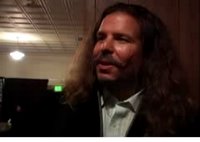
If you want to know some of Adrian's thoughts on guerilla filmmaking and hear his impromptu prasie for Down and Dirty DV: Documentaries, ch
eck out the quicktime clip below. (*When the podcast drops later this month, I'll put up some of the actual sit-down interview that I did with Adrian later the same day.)


Who goes to Sundance?
Everybody seems to go to Sundance/Slamdance for different reasons. Obviously, if you have a project in one of the festivals, you go down to promote it. However, there are also a lot of filmmakers (established and aspiring) that go mostly go to attend the various panels and to meet and network with other filmmakers. And of course there are DP’s, Agents, Actors, Distribution Companies, and Equipment manufacturers all promoting themselves, their films, or their companies. There are also a surprising number of just film fans, who only go for the movies and parties (if they can worm their way in that is).

So it’s a real hodgepodge of the entire film community and you don’t have to have a film in the festival to make it worthwhile. Personally, I think it’s more enjoyable when you don’t have a project to promote, because then you can actually see some films. It takes an incredible amount of planning, energy, and hustle to really get the word out about your project. (I got to see all of a one-hour block of shorts and attended 0 parties this year. )

Despite my best intentions to see more films, I was just too wiped out at the end of a long day of walking up and down Park City’s steep Mainstreet with a backpack full of fliers, t-shirts, books, and DVD’s… not to mention the camera and sound gear I was lugging to grab more interviews for the video podcast and companion DVD. Sadly, I was in bed before 11:00pm most nights. If it wasn’t for the free RedBull at the Slamdance events, I would never have made it through the days! Thanks guys. I met a lot more people doing some interesting projects that I want to shout out, but more on my Park City adventures in my next post...