Wednesday, February 21, 2007

The Democratization of Cinema?


Check this recent article in the New York Times:
"Where’d You Go to Film School? In My Bedroom"

It has some great ideas to contemplate. The article breaks down recent DVD tutorials which purportedly teach you the basics of filmmaking like, "Film School in a Box", "Hollywood Camera Work" and "Make your own Damn Movie" from the director of "The Toxic Avenger" at Troma Entertainment.

It then goes on to discuss the ideological conflicts and similarities between the creators of these programs and traditional film school programs. Good reading material for anyone interested in the future of filmmaking.

The article ends with this quote: "...democratization appears to be an irreversible trend in cinema. The thousands of movies each year now submitted to festivals around the world are testimony to a guerilla mentality that says no one needs official permission to make a film; and the advocates of teaching software often see themselves not so much training, but liberating new filmmakers."

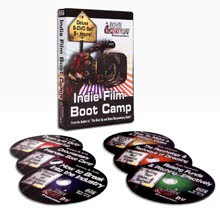
As you are probably already aware, Down and Dirty DV is putting out it's own a one of kind guerrilla filmmaking DVD tutorial this Fall. If you liked the video podcast and the book, you'll definitely dig the DVD. Also, drop us an email if there are any particular topics you' like us to put on the DVD.

Whether you go to film school or not, it's always a wise practice to expand and round out your filmmaking knowledge with fresh educational sources and new approaches to filmmaking. That's what Down and Dirty DV is all about!

Copyright Law


Okay, copyright law isn't sexy.

But it is handy.

There are real some basic things about copyrighting film and video work that I was completely unaware of. But a recent visit to The United State Copyright Office set me up with all the copyright information I'll ever want. For a government office, they have a great, straightforward website. Check the copyright basics for some quick answers, but if you get into the details this stuff is very useful.

For instance, here's all you have to do to properly mark your film or video for copyright.

Another surprising piece of knowledge from the office: "Copyright exists from the moment the work is created.... Your work is under copyright protection the moment it is created and fixed in a tangible form that it is perceptible either directly or with the aid of a machine or device."

While The U.S. Copyright Office charges fees to register a creative work, they kindly points out that those fees are almost completely unnecessary. Whoever heard of a government office not trying to charge you fees?!

Also, whoever put this site together had a strange sense of humor - check the link on how to copyright your Elvis siting!

And a final pointer: just press option-g to get that nifty little copyright symbol.

© 2007 Nathan Kensinger/Down and Dirty DV

Monday, February 12, 2007

The Best of Sundance


Sundance 2007 is over, but now the best part of the festival is online. The organizers of the festival have made available a huge trove of material that should be helpful for any filmmaker.

Included on the site are short interviews with many of the filmmakers who screened work at the festival, explaining their filmmaking process.

Another great feature on the site is the inclusion of over 40 of the short films exhibited at Sundance, shown in their entirety along with a contact list and full credits.

One particularly good short is "Motodrom" - directed by Joerge Wagner - which won an honorable mention award for short films at the festival.

Also available at this post-fest roundup is a interesting collection of trailers from the last 25 years of Sundance, starting back when it used to be called "The United States Festival."(!)

Check it out!

Monday, January 29, 2007

Filming underground


It has long been believed, by many filmmakers and photographers, that shooting in the iconic New York City subway system is against the law and a great way to get the unwanted attention of transit cops. In a post 9/11 city, this belief is generally accepted as untested fact. Why should you expect to be allowed to freely capture images in such a potentially sensitive environment?

The Metropolitan Transportation Authority (MTA) has tried at least twice in the past few years to institute a ban on photography and filming for safety reason. But public outcry has so far succeeded in stopping them in their tracks.

And so, buried in the Restricted areas and activities section of the MTA's the rules of conduct is Section 1050.9 C.

Why not print out a copy and take it along on your next low-budget, hand-held, unlit shoot?

"Section 1050.9 C

Photography, filming or video recording in any facility or conveyance is permitted except that ancillary equipment such as lights, reflectors or tripods may not be used. Members of the press holding valid identification issued by the New York City Police Department are hereby authorized to use necessary ancillary equipment. All photographic activity must be conducted in accordance with the provisions of this Part."


And for anyone interested in making a big budget Hollywood movie in the New York Subway - heres a great how-to article from the MTA:
http://www.mta.info/mta/news/newsroom/nyct-lopez.htm

Meanwhile London's metro system, considered by many to be almost as scenic as New York's, requires permits for all filming and photography:
http://www.tfl.gov.uk/tube/arts/filming/filming-faqs.asp

Monday, January 22, 2007

Festival Strategy 2007


It's a new year and that means its time for another round of film festivals. According to the New York Times, we are in "January, the month of Sundance" and every newspaper and film site is doing their spin on this behemoth film festival. The San Francisco Chronicle says Sundance "Puts Risk-Takers at Forefront" while Indiewire has devoted all of its headline content to "Park City.”

A more instructional article for filmmakers was recently published in the New York Times, an article featuring Withoutabox.com, a six year old company that connects filmmakers to festivals around the globe. The thrust of the article, besides detailing how this online company works, was that there are now more filmmakers vying for slots in film festivals then ever before, partially because of companies like Withoutabox. To meet this demand, there are more and more film festivals popping up around the country.

What's a filmmaker to do with all these festivals and with the increase in competition?

The answer is Festival Strategy, as recommended by Slamdance, the alternative to Sundance. This smaller alternative festival says “it is important to have a festival strategy. It's better to premiere your film at a more high profile festival, and then play the smaller fests later in the year.”

Check out this great guide to Festival Strategy from Disc Makers which answers all the questions on how to deal with the film festival circuit...


Also, just in case you missed it, here's a link to the most recent Down and Dirty DV Podcast, an article entitled "7 Ways to Work a Film Festival" (.pdf - Adobe Acrobat file.)

And good luck in the New Year!

Monday, January 8, 2007

We'll Fix it in Post!!


Well, for most Down and Dirty filmmakers, you are your own post! You are the one scratching your head late at night in front your own computer trying to whip those less than perfects shots into shape.

I wanted to give you a little tip about one of the best resources for post-production information on the web: http://www.kenstone.net/

Bookmark this page before you start post-production!

Ken Stone's Final Cut Pro is first place I go when I want to understand anything about Final Cut Pro, iMovie, DVD Studio Pro, iDVD, digital effects, or anything related to the technical side of editing.

Ken's website has been around for over six years and has over 500 articles that are full of clear, simple, step by step instructions. He has articles on how set up your project, how to edit (from the basics to more advanced), and how to create any number of useful and nifty effects. If you find yourself needing 'to fix it in post' but you don't know how, look for the answer on Ken's page.


For example check out this tutorial on ways to make 4:3 footage fit into your 16:9 project.
Faking It : Making 4:3 footage work in 16:9 projects. By Jude Cotter

Sunday, January 7, 2007

New Blog Writers Join the Down and Dirty DV Nation

As you can tell, the blog has been a little thin on new entries as of late. The truth is since starting the Down And Dirty Dv Project (consisting of this blog, a podcast, as well as instructional books, DVD's, and filmmaking workshops) it has grown beyond what one man can maintain on his own (especially a man with a full-time job, wife, 3-year old, an hour commute and freelance gigs!).

But, no worries, I have no intention of letting the project slip into the abyss of blog-fading or pod-fading. Instead, I've brought on two fellow filmmakers who share my Down and Dirty DV philosophies and are excited to share filmmaking tips, insights, and info with the ever-expanding Down and Dirty DV Nation (that's you).

They are Meghan O. and Nathan K.

Both are graduates of Hampshire College and passionate and talented documentary filmmakers in their own right. They've been helping to pull elements of the book and podcast together behind the scenes, but now it's time for them to step into the spotlight. So look for more frequent posts on this blog baring their names.

So when you see their posts, leave a comment, shout-out, or email and welcome them to the fam. The Down and Dirty DV Nation is growing and on the rise.

Also, if you are a fan and interested in being a regular contributor to this blog, shoot me an email at anthony@downanddirtydv.com and we'll take it from there.

-Ant.


Tuesday, December 5, 2006

Episode #5 - Show Notes - Adrian Belic Interview

Episode #5 was the first video podcast featuring an impromptu interview with documentary producer/director, Adrian Belic. Last year at Sundance I approached Adrian at one of the documentary seminars about scheduling an interview after I overheard him giving some passionate filmmaking advice to two other docmakers.

He was too busy to schedule an interview, but said we could knock one out right then. A few minutes later, we sneaked into a corner (okay it was basically a storage closet) and shot this impromptu interview. (Hence the lack of lighting.)


If you don't know who Adrian Belic is, he and his brother, Rocco, made the Oscar-nominated and Sundance Audience Award-winning doc, "Genghis Blues", which is about a blind blues singer that learns then excels at the rare art of Tuvan throat singing then goes on to the far reaches of the Republic of Tuva (near Mongolia) to compete in an annual Tuvan throat-singing contest. Adrian's most recent flick making the festival rounds is, "Beyond the Call". It's about a small group of doctors who risk life and limb to administer aid and healthcare to some of the most dangerous parts of the world.

So many people become jaded so quickly in this business. As soon as they achieve some success, they forget what it was like to be that hungry kid with a camera and a dream. So, it was refereshing to meet someone who's been in the film game so long, but hasn't lost their passion. In fact, talking to Adrian was like talking to a new film student, with the major exception that he actually knows what he's talking about.

Anyway, if you liked the little snippets of the video interview in the podcast, there will be longer versions of all the interviews in our upcoming instructional Guerrilla Filmmaking DVD which will hopefully be dropping this Spring or early Summer. There are also more video podcasts on the way soon. Mad thanx to Frank Monteleone of Full Armor Productions who did the animation and editing for the video podcast.

Monday, October 2, 2006

Wednesday, August 16, 2006

Episode 3 Show Notes - Pow!!!

Alright, I am back from summer vacation. Episode #3 – Learning the Process of Filmmaking is officially out the box. This is Part 1 of a two-parter.

This is a topic I haven’t really come across much discussion on, so I thought I’d give you my take. Essentially, I wanted to just relay a list of all the different ways that that you can go about furthering your filmmaking education.

If you combine all of these different types of resources, you can program your own personal film school curriculum and pick an choose the resources that work best for your learning style. In this episode I duscuss Filmmaking Podcasts and Documentaries and DVD's about filmmaking.

Keep in mind that these are by no means exhaustive lists, but rather starting points and suggestions based on what I personally recommend and have seen work for others.

More comprehensive lists will be included in the upcoming release of my book, Down and Dirty DV: Vol. 1 - Documentaries.

Filmmaking Podcasts:

Izzy Video
Probably the most comprehensive collection of free filmmaking video tutorials out there. When I just checked, there were more than 40 different video tutorials on core subjects such as 3-point lighting, shoting green screen, and editing techniques. These are at the hobbyist/beginner level and I highly recommend them if you’re just starting out. How he keeps these coming for free with a day job and a family I don’t know, but thank you, Izzy, and more power to you. It’s a great service.

The DV Show

Get your technical questions answered here. Codecs? What type of tape to use? Sync issues? Listen or ask the DV Show, because God knows I can’t answer all your technical questions!

KCRW’s The Business
My favorite Hollywood news show. Not Entertainment Tonight, but rather in-depth discussions and interviews with industry movers and shakers about current news and trends in the entertainment industry that affect filmmakers, actors, audience and studios alike.

KCRW’s Martini Shot
Amusing anecdotes of Hollywood culture and kookiness. Short, insightful and funny.

Four Eyed Monsters
I’ve ranted about these guys before and they’ll be in an upcoming video podcast, so I’m not gonna spend too much time here. But I will say that I think that this is the prevailing model for using the power of podcasting to promote your film. Watch them all from Episode One and do a Google search and look at what any of you out there could do if you free your mind, take advantage of new technologies and make wise use of your resources.

Mac Break
I won’t lie, some of this stuff goes over my head (I’m only 5’5”), but these mac video nerds provide some great technical info, especially with regards to video/filmmaking technology on the Mac. (And "nerds" is not a derogatory term here... these guys are very smart and on the cutting edge.)

Filmmaking Central

Another informative podcast dealing with technical and production issues.

Invisible Children
Excellent model for the power of podcasting to promote and distribute social-issue / activist docs. If you are a documentary-maker you can’t afford not to study these guys and their promotional/fundraising model. They take full advantage of online media from communication to fundraising to marketing and distribution. I believe this is a model for the bright new future of documentary film.

Hearts of Darkness Article
This is an article about the doc Hearts of Darkness from a Cinema Studies standpoint. FilmEducation.org also has many resources for film educators such as study guides and discussion questions for various films, new and old.

Documentaries and DVD’s About Filmmaking

American Movie Official Site
This documentary is probably hands down my favorite film about filmmaking (doc or narrative). It is drop-dead funny, heart-breakingly tragic and totally inspirational all at once. It’s about the daily struggles of Milwaukee low-budget filmmaker named Mark Borschardt to get his projects made despite the lack of local filmmaking resources, shortage of professional talent, overwhelming debt, and his own personal demons. While you may find Mark’s actual filmmaking a little rough around the edges, this man’s persistence, belief in his vision, unwaivering enthusiasm and ability to push through no matter what is an awe-inspiring example of the difficulties of realizing a low-budget project and still coping with all the complications of everyday life.


Robert Rodriguez’s 10 Minute Film School
What more can I say? While some of you younger filmmaker’s may only know Robert Rodriguez from his big-budget Hollywood fare such as Spy Kids, his roots are pure Down and Dirty guerrilla. As legend has it, his first feature film, El Mariachi, was shot in Mexico for $7000.00 which he’d largely earned as a medical test patient. El Mariachi went on to became a huge indie hit and launch his career as a major player in Hollywood. His book, “Rebel Without a Crew” is a guerrilla film classic and his essay/DVD extra, “Robert Rodriguez’s 10-Minute Film School” is his simple advice for guerrilla rebels. While I disagree with his assertion that when it comes to cameras the crappier the better, I largely follow a lot of this advice for squeezing out production value an keeping things moving when shooting when shooting. This is a link to the essay, but definitely check out the video version of “10-Minute Film School” on the “EL Mariachi” DVD extras.

Wrap Up
That’s it for now. Stay tuned for Episode 4 - part 2 of Learning the Process of Filmmaking, which I will drop as soon as I have a chance to “enhance” it with pics and links. (Probably in a week or two.) In Episode 4 I will cover Film School, DVD Extras, Workshops, Crewing, Tv Shows and a few more learning resources.

And seriously, give a brotha some feedback, leave a comment below, send an email, or better yet, leave a comment on iTunes if you’re feeling the podcast, because I haven’t gotten much feedback yet and I’m trying to hone the show to best serve YOU the Down and Dirty Digital Posse.

A lot of work goes into putting together each episode and I just want to know if this is an effective resource for you or if I should spend my nights and weekends doing normal things like relaxing and spending time with friends and family. Holla back, y’all.

Peace, Love and Video,

-Ant.